What Is Cross-Linked Polyethylene (XLPE) Foam? A Complete Guide
Cross-linked polyethylene foam — often abbreviated as XLPE foam, and marketed under product names such as IXPE and XPE — is one of the most versatile engineering materials in modern manufacturing. It is the quiet, invisible workhorse behind car interiors, acoustic flooring underlayment, construction insulation, medical equipment, and protective packaging.
But what exactly makes it different from ordinary polyethylene foam? And what should you know before specifying it? This complete guide covers the chemistry, the production processes, the performance properties, and the real-world applications of XLPE foam.
What Is XLPE Foam?
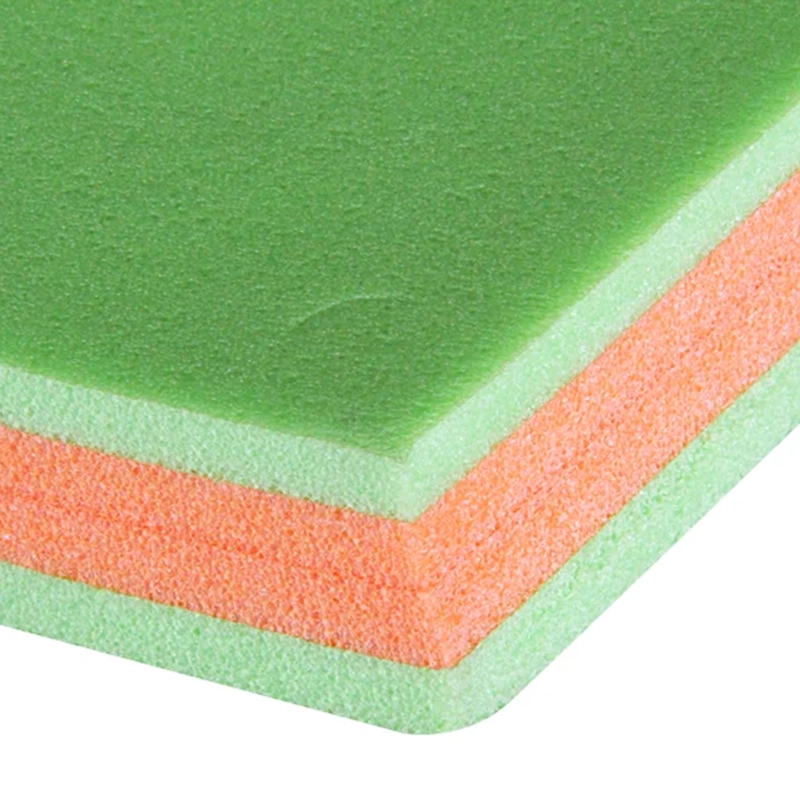
XLPE foam is a closed-cell, flexible foam made from polyethylene that has been chemically or physically cross-linked. Cross-linking joins the polymer chains into a three-dimensional network, turning the material from a simple thermoplastic into an elastic, heat-resistant, and dimensionally stable foam.
The most important consequence of cross-linking is the closed-cell structure. Each gas bubble inside the foam is a sealed, independent cell. That single feature is responsible for most of the material’s famous properties: it repels water, blocks heat, dampens sound, and resists chemical attack.
How Is XLPE Foam Made? Two Production Routes
There are two commercially important ways to cross-link polyethylene foam, and they produce the two product families you will encounter when sourcing:
Electron Beam Cross-Linking (IXPE Foam)
- Polyethylene pellets are mixed with auxiliary agents and extruded into a continuous sheet containing a chemical blowing agent.
- The sheet passes under an electron beam accelerator, which irradiates it and creates cross-links between polymer chains.
- The sheet is heated in an oven; the blowing agent decomposes, and the material expands into a foam.
- The foam is calibrated to final thickness, cooled, and wound onto rolls or cut into sheets.
Because irradiation creates the cross-links without chemical residues, IXPE foam is clean, odorless, and has a remarkably fine, uniform cell structure with a smooth surface.
Chemical Cross-Linking (XPE Foam)
- Polyethylene is compounded with a chemical cross-linking agent and a foaming agent.
- The sheet is extruded and then heated; the cross-linking agent reacts to bond the polymer chains.
- The foaming agent decomposes, expanding the material into a closed-cell foam.
The chemical route is less expensive to run at scale, which makes XPE foam the value option — ideal for bulk insulation and packaging applications where surface finish is less critical.
Key Properties of XLPE Foam
Whatever the production route, cross-linked polyethylene foam delivers a consistent set of performance characteristics:
| Property | Typical XLPE Foam Performance |
|---|---|
| Cell structure | Closed cell, independent cells |
| Water absorption | Extremely low (<0.01 g/cm² for IXPE) |
| Thermal conductivity | <0.04–0.05 W/m·K |
| Operating temperature | −40 °C to +80 °C (PE base; IXPP extends to ~130 °C) |
| Density range | 15–200 kg/m³, most common 25–120 kg/m³ |
| Compression set | <5% for high-grade IXPE |
| Chemical resistance | Resistant to most acids, alkalis, and solvents |
| Recyclability | Thermoplastic; recyclable, including oil-refining recovery |
| Food safety | Non-toxic, odorless; food-contact grades available |
Why Closed Cells Matter
Closed-cell structure gives XLPE foam its three signature behaviors:
- Waterproofing — water cannot travel through the foam, so it does not absorb moisture, rot, or grow mildew, even in humid environments.
- Thermal insulation — trapped gas in sealed cells cannot convect, which is why thermal conductivity stays below 0.05 W/m·K.
- Acoustic damping — the resilient closed-cell matrix converts impact energy into heat, reducing both airborne and impact noise.
XLPE Foam vs Other Common Foams
| Material | Open/Closed Cell | Water Resistance | Heat Resistance | Cost | Typical Use |
|---|---|---|---|---|---|
| XLPE (IXPE/XPE) | Closed | Excellent | −40 to +80 °C | Medium | Automotive, construction, underlayment |
| EVA foam | Closed | Good | Lower (softens ~70 °C) | Low | Sports mats, footwear, packaging |
| EPDM rubber foam | Closed (often) | Good | Higher (up to ~120 °C) | High | Weather seals, outdoor gaskets |
| Polyurethane (PU) foam | Open | Poor | −40 to +100 °C | Low–Medium | Furniture, sound absorption (open cell) |
| Polystyrene (XPS/EPS) | Closed | Good | Low (melts easily) | Low | Rigid insulation boards |
For most flexible, moisture-resistant, and formable applications, XLPE foam offers the best balance of performance, processability, and cost.
Major Applications of XLPE Foam
Automotive
XLPE foam is used across vehicle interiors: door panels, dashboard padding, sun visors, gaskets, trunk liners, and noise insulation layers. The combination of thermoformability, low VOC grades, and vibration damping makes it the default spec for automotive trim suppliers.
Construction and HVAC
Closed-cell insulation keeps pipes, ducting, and building envelopes free of condensation and heat loss. XPE foam in particular is a cost-effective choice for pipe wrap, insulation panels, and thermal breaks.
Flooring Underlayment
Acoustic underlayment for laminate and engineered wood floors is one of the fastest-growing uses. IXPP foam (the polypropylene sibling of XLPE) leads this category because its higher stiffness and creep resistance preserve acoustic performance for decades.
Packaging and Logistics
Foam sheets and die-cut inserts protect electronics, glassware, and industrial components. The material’s chemical inertness also makes it safe for direct contact with sensitive products.
Medical and Leisure
Non-toxic, skin-friendly grades are used in rehabilitation mats, cushioning, and medical device padding, while closed-cell hygiene makes it easy to clean.
How to Specify XLPE Foam Correctly
A complete specification avoids the most common sourcing mistakes:
- Type: IXPE (irradiated) or XPE (chemical) — state if surface finish matters.
- Density (kg/m³): higher density = stiffer, stronger, more expensive.
- Thickness: standard sheets 0.5–30 mm; XPE can go thicker (up to 100 mm).
- Dimensions: sheet size or roll width/roll length.
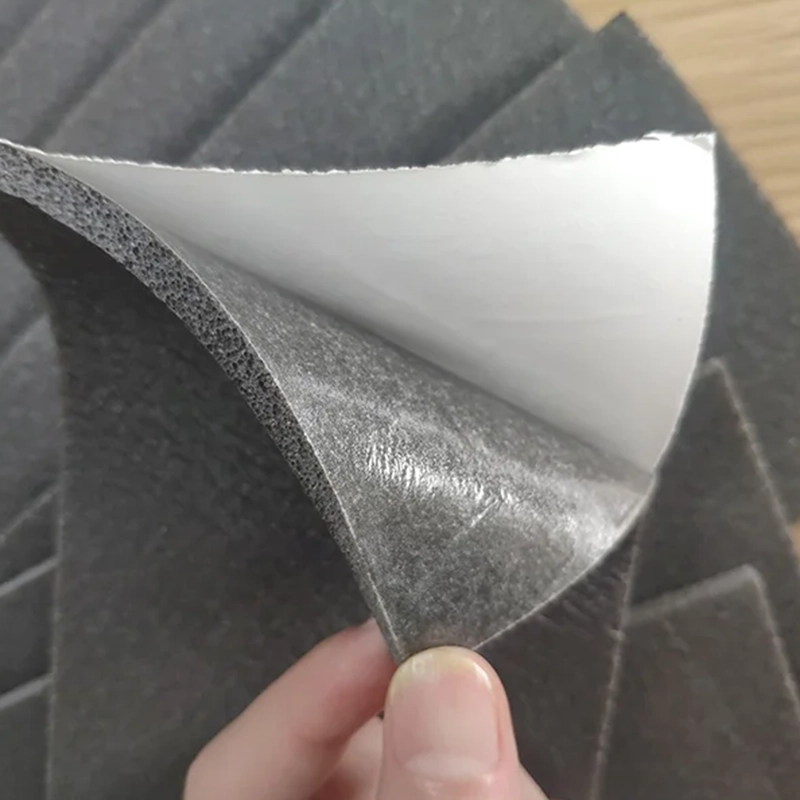
- Finish: plain, laminated with film/fabric, or adhesive-backed.
- Compliance: RoHS, REACH, automotive-grade, UL94 (flame), food-contact grades.
Frequently Asked Questions
Is XLPE foam the same as IXPE foam?
Not exactly. XLPE is the generic family name for cross-linked polyethylene foam. IXPE is the specific product made by electron beam irradiation cross-linking; XPE is made by chemical cross-linking. Both are XLPE foam.
Is XLPE foam waterproof?
Yes. Its closed-cell structure makes it water-resistant and effectively non-absorbent, which is why it is used in humid and outdoor-adjacent applications.
What temperature can XLPE foam withstand?
Continuous service is typically −40 °C to +80 °C for polyethylene-based foam. Polypropylene-based IXPP extends the upper limit to roughly 130 °C.
Is XLPE foam toxic or odorous?
High-quality IXPE foam is manufactured without residual chemical cross-linking agents, making it odorless and safe for contact with skin and, in food-contact grades, with food.
What is XLPE foam used for?
The most common uses are automotive interior parts, acoustic flooring underlayment, HVAC and pipe insulation, protective packaging, and medical/leisure cushioning.
Source XLPE Foam from a Factory That Understands It
At Huzhou Meishuo New Material Co., Ltd., we manufacture IXPE, XPE, and IXPP foam in-house, with densities and thicknesses engineered for automotive, construction, flooring, and packaging customers worldwide. Our processing technology covers lamination, die-cutting, and thermoforming, so you receive ready-to-use parts rather than raw sheets.
- See the full range: IXPE Foam, XPE Foam, IXPP Foam, Anti-Static & Conductive Foam
- Need help choosing? Compare IXPE vs XPE vs IXPP
- Request samples and pricing via our Get A Quote form or email info@msfoam.com.