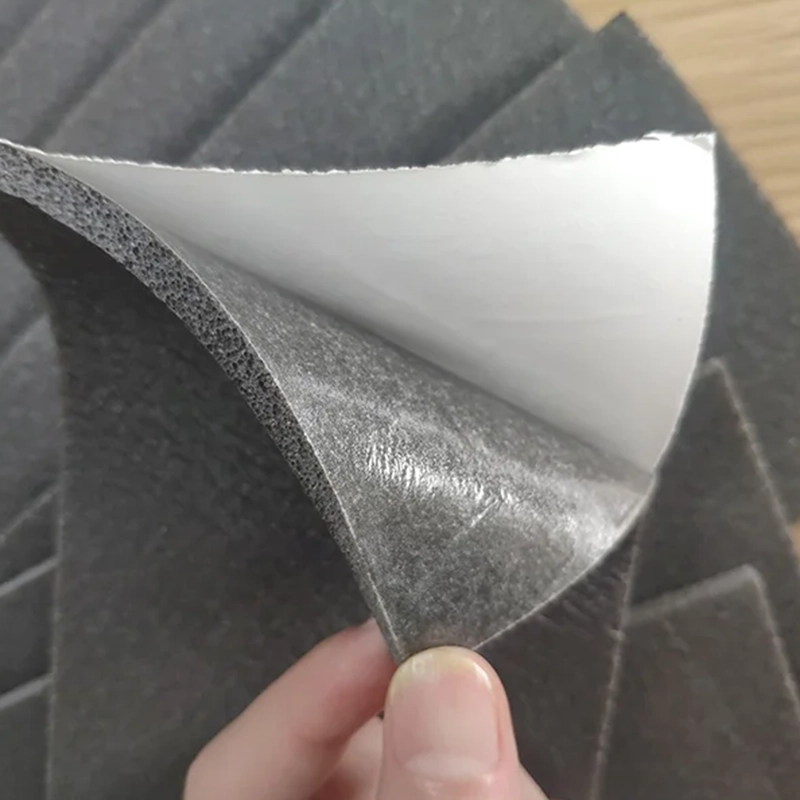
Espuma IXPE, XPE e IXPP: ¿cuáles son las diferencias y cómo elegir?
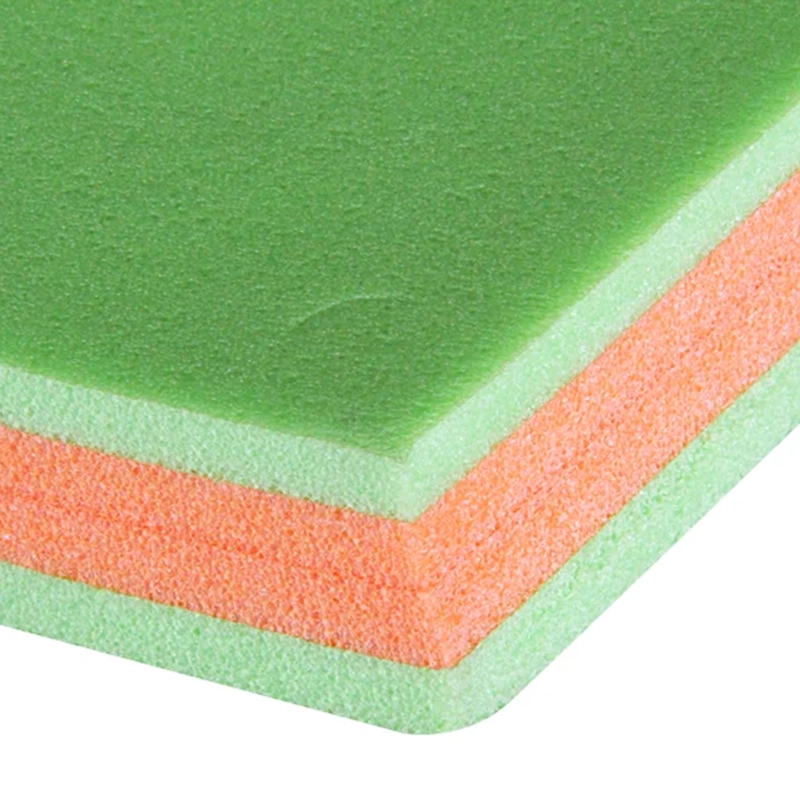
Choosing the right foam material can make or break a product — whether you are engineering an automotive interior, a flooring underlayment, or protective packaging. Three of the most commonly specified materials in our industry are IXPE foam, XPE foam, and IXPP foam. They look similar and are all closed-cell foams, yet their production processes, performance profiles, and costs differ significantly.
This guide breaks down exactly how IXPE vs XPE vs IXPP compare across cell structure, density, thermal and acoustic performance, and price — and gives you a practical decision framework so you can specify the right material on your next project.
What Are IXPE, XPE, and IXPP Foam?
Before comparing, it helps to understand what each material actually is. All three belong to the family of cross-linked polyolefin foams, and they share the same closed-cell structure that makes them waterproof, lightweight, and durable.
IXPE Foam (Irradiated Cross-Linked Polyethylene Foam)
IXPE foam is produced by mixing polyethylene with harmless auxiliary materials, extruding it into sheets, and then forming a three-dimensional network of independent closed cells through electron beam irradiation cross-linking. The irradiation process modifies the molecular structure without chemical residues, which is why IXPE is considered one of the most environmentally friendly foam materials on the market.
Key characteristics:
- Smooth, fine, uniform surface texture
- Extremely low water absorption (<0.01 g/cm²)
- Low thermal conductivity (<0.04 W/m·K)
- High resilience, permanent compression set below 5%
- Odorless, non-toxic, and 100% recyclable
- Excellent processability: lamination, cutting, thermoforming
XPE Foam (Chemically Cross-Linked Polyethylene Foam)
XPE foam is also made from polyethylene, but cross-linking is achieved through a chemical foaming agent rather than electron beam irradiation. The chemical process is more cost-effective at scale, which makes XPE foam the budget-friendly member of the family.
Key characteristics:
- Slightly coarser cell structure and surface texture than IXPE
- Good thermal and moisture insulation at a lower cost
- Available in a wide range of densities and thicknesses
- Commonly used where appearance is secondary to insulation performance
IXPP Foam (Irradiated Cross-Linked Polypropylene Foam)
IXPP foam uses polypropylene as the base resin, cross-linked by electron beam irradiation. Polypropylene gives the foam a higher softening point than polyethylene, so IXPP handles heat better and behaves more rigidly under compression.
Key characteristics:
- Higher temperature resistance (typically up to ~130 °C vs ~80 °C for PE-based foams)
- Good acoustic damping — widely used in flooring underlayment
- Higher stiffness and better creep resistance than IXPE
- Excellent chemical resistance
Production Process: Irradiation vs Chemical Cross-Linking
The single biggest difference between these materials is how they are cross-linked.
| Proceso | Method | Characteristics |
|---|---|---|
| IXPE / IXPP | Electron beam irradiation | Clean, no chemical residue, fine uniform cells, smooth surface, higher processing precision |
| XPE | Chemical cross-linking (peroxide/foaming agent) | Lower production cost, coarser cells, slightly rougher surface |
Irradiation cross-linking is more expensive per unit, but it produces a more consistent cell structure and a surface that is easier to laminate, print, and thermoform — which is why IXPE is the default choice for visible interior applications such as automotive trim and soundproof underlayment.
IXPE vs XPE vs IXPP: Key Differences at a Glance
| Propiedad | Espuma IXPE | Espuma XPE | Espuma IXPP |
|---|---|---|---|
| Base resin | Polyethylene | Polyethylene | Polypropylene |
| Cross-linking method | Electron beam irradiation | Chemical | Electron beam irradiation |
| Surface quality | Smooth, fine, uniform | Coarser, slightly rough | Smooth, stiff |
| Temperature resistance | Up to ~80 °C | Up to ~80 °C | Up to ~130 °C |
| Thermal conductivity | <0.04 W/m·K | ~0.04–0.05 W/m·K | ~0.04 W/m·K |
| Water absorption | <0.01 g/cm² | Very low | Very low |
| Acoustic performance | Good | Moderate | Excellent (flooring underlay) |
| Flexibility | High | High | Moderate (stiffer) |
| Relative cost | Medium | Lowest | Higher |
| Typical thickness range | 0.5–30 mm | 2–100 mm | 0.5–20 mm |
Note: values are typical ranges; exact specifications depend on density and production grade.
Which One Should You Choose? Application-Based Guide
Automotive Interior Trim and Sealing — IXPE or IXPP
Automotive applications demand tight tolerances, low VOC, and precise thermoforming. IXPE foam is the workhorse for dashboard liners, door panel padding, gaskets, and sun visors because of its smooth surface and processability. For engine-adjacent parts or components exposed to higher temperatures, IXPP foam is the safer choice.
Flooring Underlayment and Acoustic Insulation — IXPP
If your project is acoustic flooring underlayment, IXPP foam is the preferred material in the industry. Its higher stiffness improves impact sound insulation (the thud of footsteps), and its creep resistance means the underlayment keeps its thickness — and its acoustic rating — for the life of the floor.
Insulation Panels, Pipe Wrap, and HVAC — XPE
For bulk insulation where cost per cubic meter matters more than surface finish, XPE foam delivers the best value. It is widely used for HVAC duct insulation, pipe wrapping, and thermal break layers in construction.
Packaging, Sports Mats, and Leisure Products — XPE or IXPE
Both work well. XPE keeps unit costs low for high-volume products such as yoga mats and packaging inserts; IXPE is specified when the visible surface needs to look premium.
How to Specify Your Foam: A 5-Point Checklist
When you send an inquiry to a foam manufacturer, include at least these five parameters:
- Material type — IXPE, XPE, or IXPP (and whether alternatives are acceptable)
- Densidad — typically 25–120 kg/m³ depending on the application
- Thickness and tolerance — e.g., 5 mm ±0.5 mm
- Sheet or roll size — e.g., 1000 × 2000 mm sheets, or rolls up to 1.2 m wide
- Additional requirements — color, lamination, adhesion, flame retardant grade, or specific standards (RoHS, REACH, automotive grade)
Supplying this information upfront cuts quotation cycles by days and prevents specification mismatches later.
Preguntas frecuentes
Is IXPE foam waterproof?
Yes. IXPE foam has a closed-cell structure with water absorption below 0.01 g/cm², which is effectively zero. It is frequently used in moisture-sensitive applications such as bathroom underlayment and waterproof gaskets.
Is XPE foam the same as IXPE foam?
No. Both are cross-linked polyethylene foams, but XPE is chemically cross-linked while IXPE is cross-linked by electron beam irradiation. IXPE offers a smoother surface, finer cell structure, and cleaner manufacturing, while XPE is generally more economical.
What is the difference between IXPE and IXPP?
The base resin is the difference: IXPE is made from polyethylene, IXPP from polypropylene. IXPP foam has higher temperature resistance (~130 °C) and better stiffness, making it the better choice for acoustic flooring underlayment and heat-exposed applications.
Can IXPE foam be recycled?
Yes. IXPE foam is thermoplastic and can be recycled, including repurposing through oil-refining recovery, which is consistent with circular economy principles.
Where can I buy IXPE and XPE foam wholesale?
Huzhou Meishuo New Material Co., Ltd. manufactures IXPE, XPE, and IXPP foam with densities and thicknesses for automotive, construction, and industrial applications. Contact us for a free sample kit and custom quotation.
Get the Right Foam for Your Application
We manufacture IXPE foam, XPE foam, and IXPP foam in our factory in Huzhou, China, with full secondary processing capabilities including lamination, die-cutting, and thermoforming.
- Browse our product range: Espuma IXPE, Espuma XPE, Espuma IXPP
- Learn about our processing technology
- Send us your specification via the Solicitar presupuesto form or email info@msfoam.com — we typically reply within 24 hours.